In conclusion, what we have here in ‘Destroying The Night Sky’ is not quite a Cadaverous Condition album, nor is it a ‘various artists’-style compilation album, nor even a conventional remix album; there is absolutely nothing categorisable about this release, and its determination to stand on its own merit makes it an album in its own right.
And yet this is so much more than your average plastic disc; this is a window into the dreams and, moreover, the nightmares of many troubled souls, all connected by the collective unconscious, and by music; it is immense and, exactly as advertised, “very dark, very difficult”.
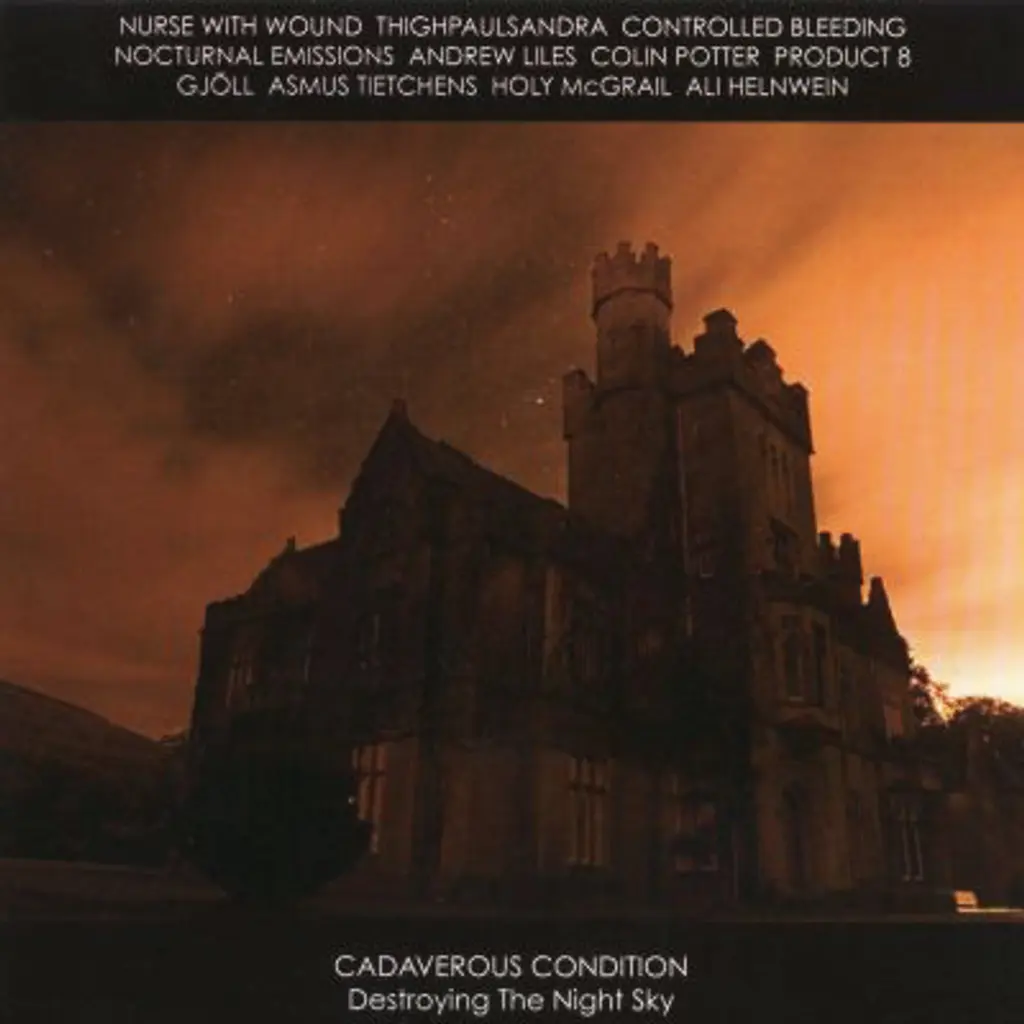
Despite being one of the most difficult albums I’ve ever listened to, this isn’t a bad place to start in understanding and appreciating the precious death metal/death folk commo(d)dity known as Cadaverous Condition – not least because each purchase is accompanied by the last album proper by CC, the mighty and weighty ‘To The Night Sky’, which was the source material for each of the tracks that comprise this release.
So, ‘Destroying the Night Sky’ is, essentially, a remix project; Wolfgang Weiss of CC has let some of the wildest and most wonderful minds of experimental music loose on the raw ingredients of his band, which is a brave thing to do, particularly with these mad bastards.
With a disc representing the monochromatic moon in the night sky, and stark, beautiful photography of the dark, sublime and weirder aspects of the natural world, the grand stately home or castle on the album cover would seem to represent a bastion of life: but it’s a tricky symbol, as the building itself is clearly from another time, and shows no obvious signs of habitation. The whole scene speaks of loneliness, confusion, and trepidation: a most suitable home for the sounds within.
Right then, a tour of the battlegrounds...
Thighpaulsandra’s opening epic is a journey through nightmarish soundscapes and snippets of growls and grunts chopped up and spliced into the background sounds like the breaths of monsters hiding in the darkness, culminating in panic and chaos: while Nocturnal Emission’s dark sound collages (3 of however many were made are included here) break up the album with – at turns – stuttering bass, rabid chanting and trebly riffage.
Products 8’s ambient mix of an acoustic guitar track is ethereal and transcendental, while Colin Potter’s ‘Relentless Repentance’ takes the slowest, heaviest riffs and dowses them in static noise, conjuring some abandoned war machine’s engine stirring back to life.
Nurse With Wound’s 'Nosedive' is one of the more experimental pieces in terms of pace: fading in and out of harsh snippets of death metal and near silent drone as though the listener is trying to retune the radio – trying (and failing) to escape from the soundtrack to a breakdown.
Conversely, some of the mixes are so subtly put together as to be outshone by their more audacious surroundings, (Gjöll’s ‘Now I see’ is a case in point), but none are weak, as such, and so all serve at the very least as strong mortar to support the weightier (de)compositions.
For those who are fans of ‘true’, ‘brutal’ extreme metal, this album might be a burnt bridge too far: it is perhaps even further divorced from conventional metal than last year's outstanding compilation 'Songs for The Crooked Path'; the ‘Fireship’ mix (by Andrew Liles) is great, but can’t outdo the brash immediacy of the original ‘clean’ version. Still, Liles' work here (also contributing ‘Defiled (At The Crossroads)’) provides some of the punchier moments that are invaluable for punctuating an album which is allowed almost infinite breathing room.
Perhaps inevitably, the most affecting and effective moments for me are those which utilise the acoustic track ‘Destroy Your Life’ – a song which distilled better than any other Cadaverous Condition song the sense of detachment from the modern world which permeates through their work, as well as the destructive power of emotional ties.
Holy McGrail’s ethereal sampling of ‘Destroy Your Life’ (entitled ‘Death Warmed Up’) plays the vocal over some ambient base and at first gives it the feel of an angry voice down a phone line, then as the mix gets grainer and the aural picture more impressionist, it becomes more like a voice on the wind. Both approaches, and the transition between them, add a darker, more lamenting feel to the song’s inherent sadness: a kind of film noir soundtrack for the future.