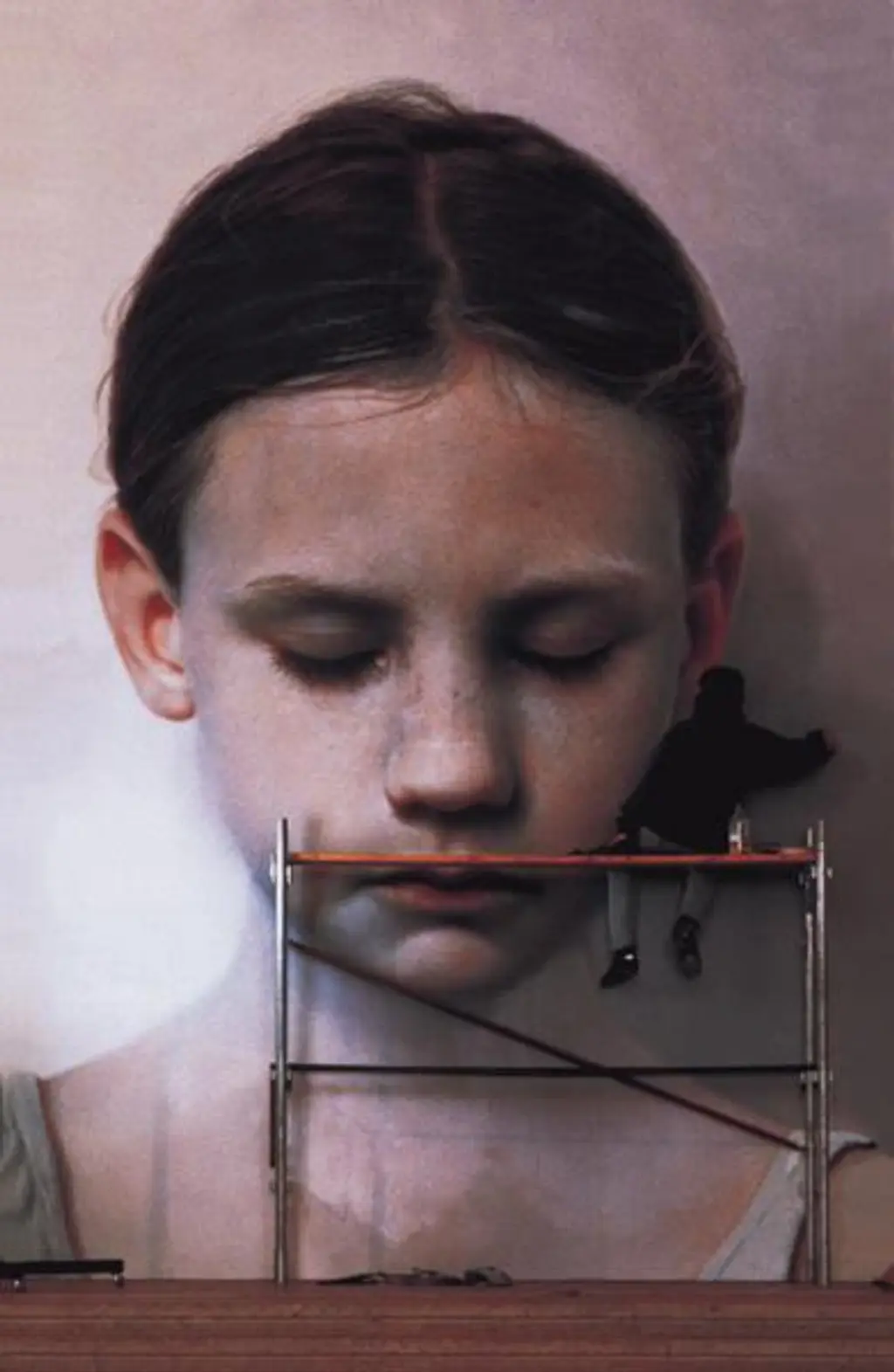
Kindskopf (Head of a Child)
Ludwig Collection in the Sate Russian Museum
THE HELNWEIN PASSION
Alexander BorovskyCurator for Contemporary Art at the State Russian Museum, St. Petersburg1997
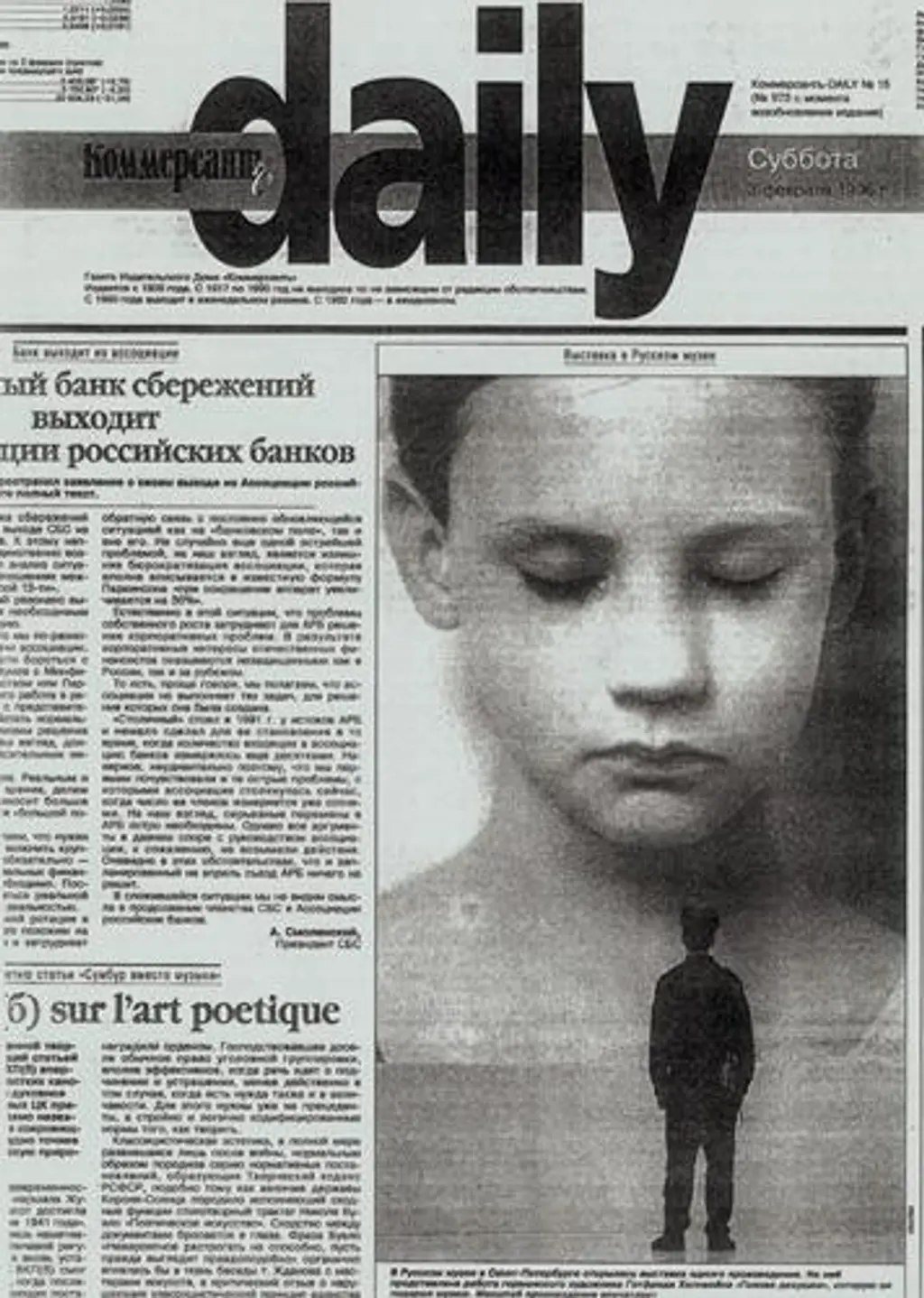
"I'll never forget the sensation I had at the unveiling of Gottfried Helnwein's "Kindskopf" in the Russian Museum. And not just because this enormous canvas (six metres in height, four in breadth), well-known from reproductions, seemed to operate in a whole new way in the real, quasi-monumental space of the museum's "Concrete Hall". I realised that I was looking at the inner content of this innovative picture from a whole new point of view.This new level of impact was also apparent on the pictorial-plastic level. What had seemed coldly technological, the aesthetics of hyperrealism, a mechanical aerographically-applied surface, proved to be living and breathing; a completely handcrafted pictorial texture.In short, a work seen in the flesh at the right time and in the right place ("Kindskopf" was both created and first exhibited in an equally monumental church-like space - in the medieval Minoritenkirche Krems), providing an instructive example of Helnwein's deliberate strategy of interaction with the viewer.Yet there was more to it than that. After all, modern art quite often offers an insight into the positive and negative manipulation of viewer perception. In the case of the Russian Museum's exhibition of "Kindskopf", however, it was circumstances that divulged (and I am sure not just for me) the direction of Helnwein's strategy."
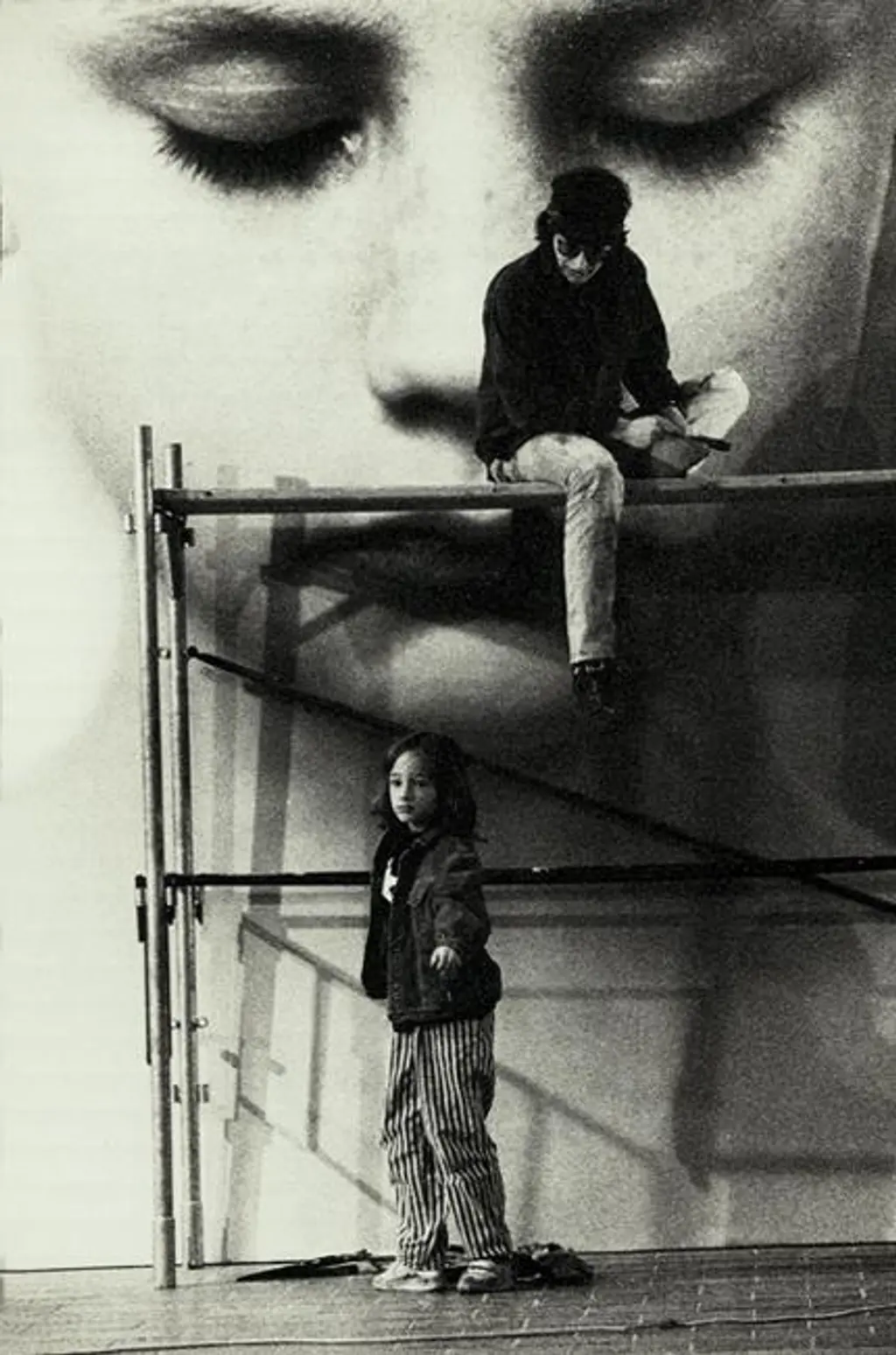
Helnwein with his son Ali
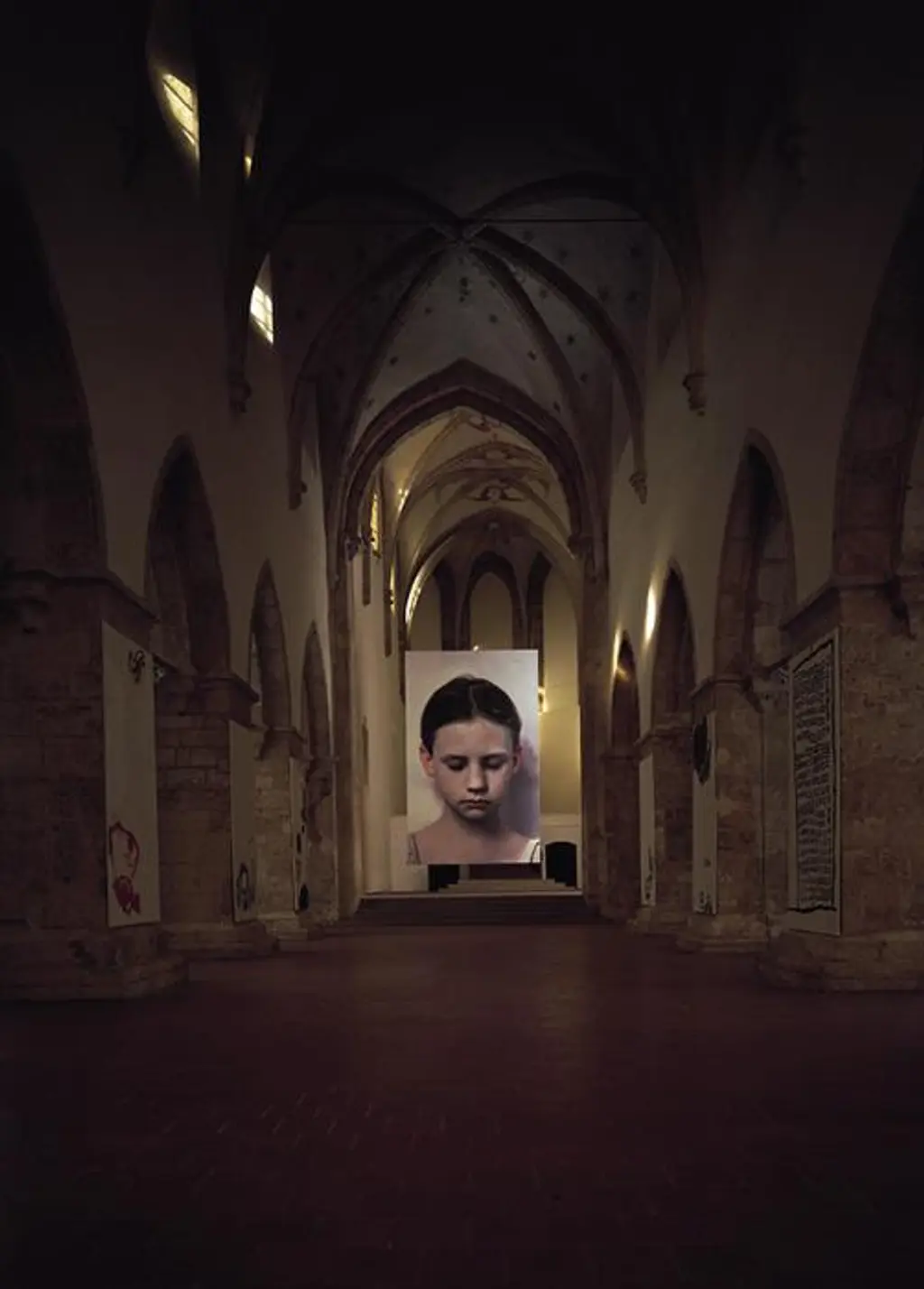
Kindskopf (Head of a Child)
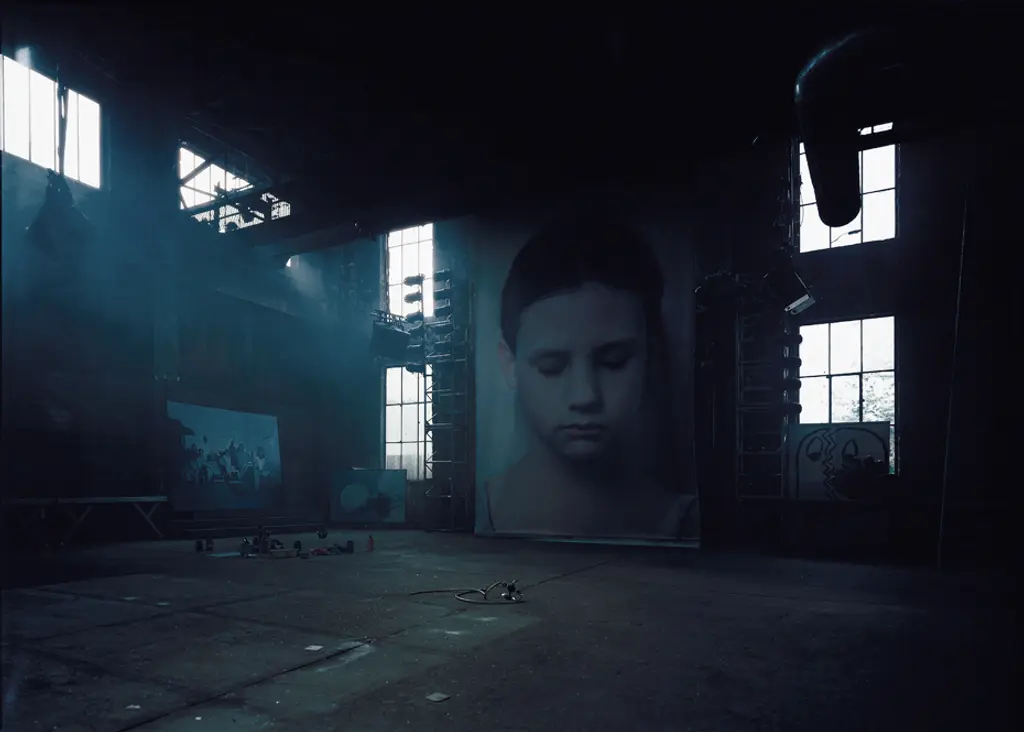
Studio Cologne
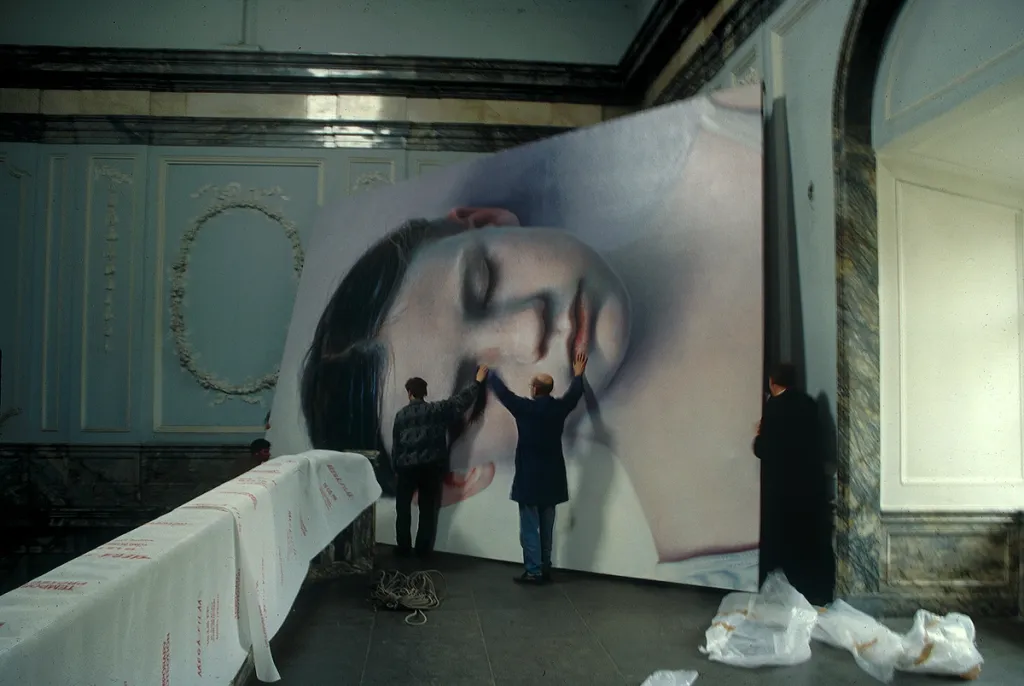
Kindskopf (Head of a Child) at the State Russian Museum, St. Petersburg
preparation for the Helnwein-Retrospective at the State Russian Museum St. Petersburg
EIN MÄDCHENKOPF FÜR SANKT PETERSBURG
Kölner Stadt AnzeigerLothar Deeg10. Oktober 1996
"Anna aus, ich glaube, Kiel", war die unübersehbare Hauptfigur bei der Eröffnung der Ausstellung des österreichischen Malers Gottfried Helnwein im Russischen Museum in Sankt Petersburg.
Wenn Kunst aus dem Westen den Weg nach Russland findet - um dort zu bleiben -, stehen zwei den Petersburgern inzwischen wohlbekannte Namen dahinter: — Irene und Peter Ludwig, die dem Russischen Museum wieder eine Schenkung gemacht haben.
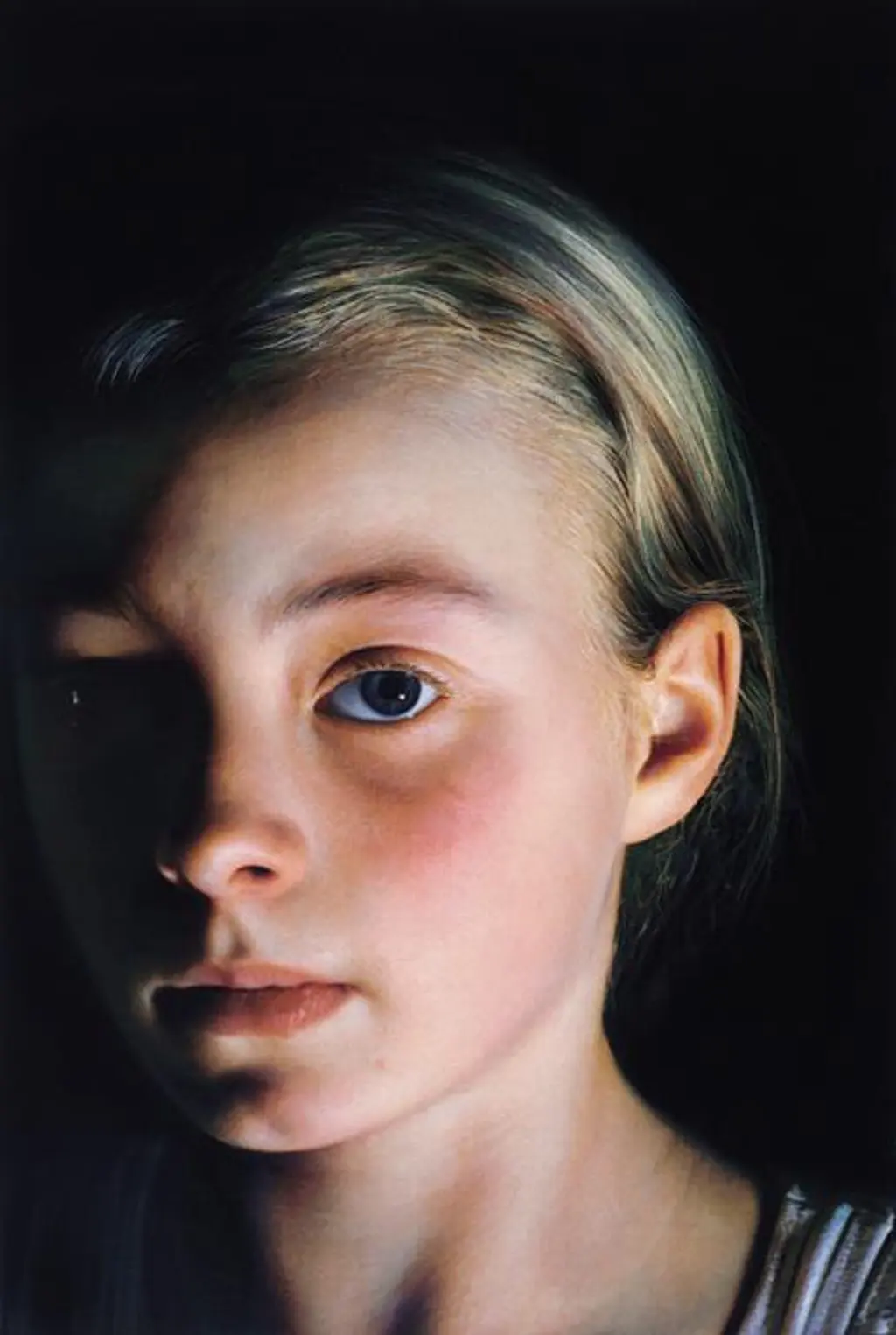
Head of a Child 5
IN LIMBO
Gwen F. ChanzitVictoria H. Myhren GallerySchool of Art and Art History, University of DenverAn exhibition of works from the Denver Art Museum’s fractional and promised gift of contemporary art from the collection of Vicki and Kent Logan.
Helnwein’s subject matter involves the complexities of the human condition. His disturbing yet provocative images of physically and emotionally wounded children have been seen as metaphors for larger global issues. He portrays the innocence of adolescence against the backdrop of shameful historical events like the Holocaust to highlight the fragility of humanity in an unstable world. Like Wong from Asia and Sherman from the United States, Helnwein offers up dramatic scenarios featuring youthful protagonists that beg a viewer to complete the equation.
The child’s face – painted in a realistic style yet eerily unreal – may allude to the uncertain (in limbo-like) quality of Helnwein’s own childhood. Helnwein is among a network of contemporary artists expressing visions that embrace and also transcend cultural nomenclature.
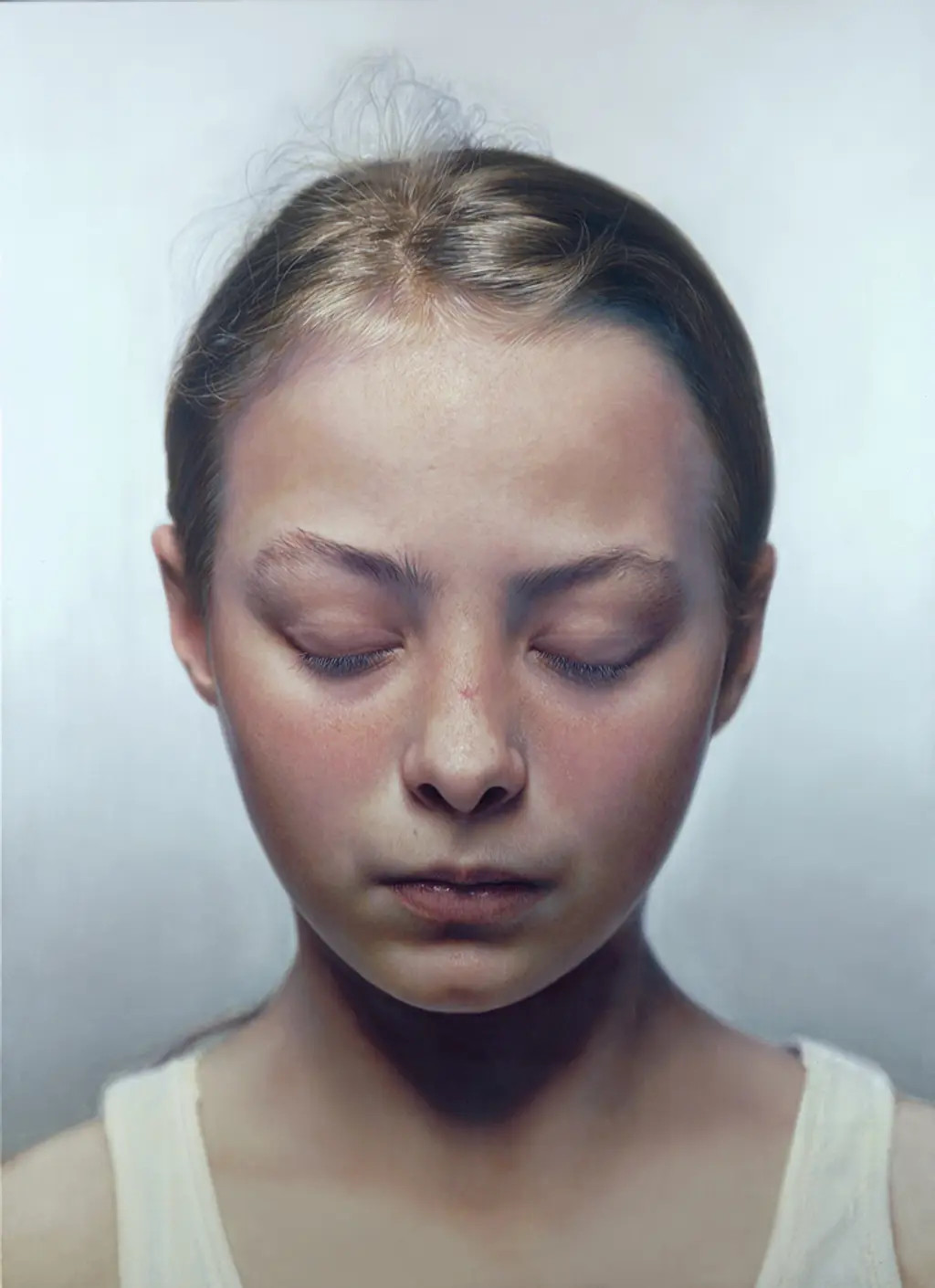
Head of a Child III
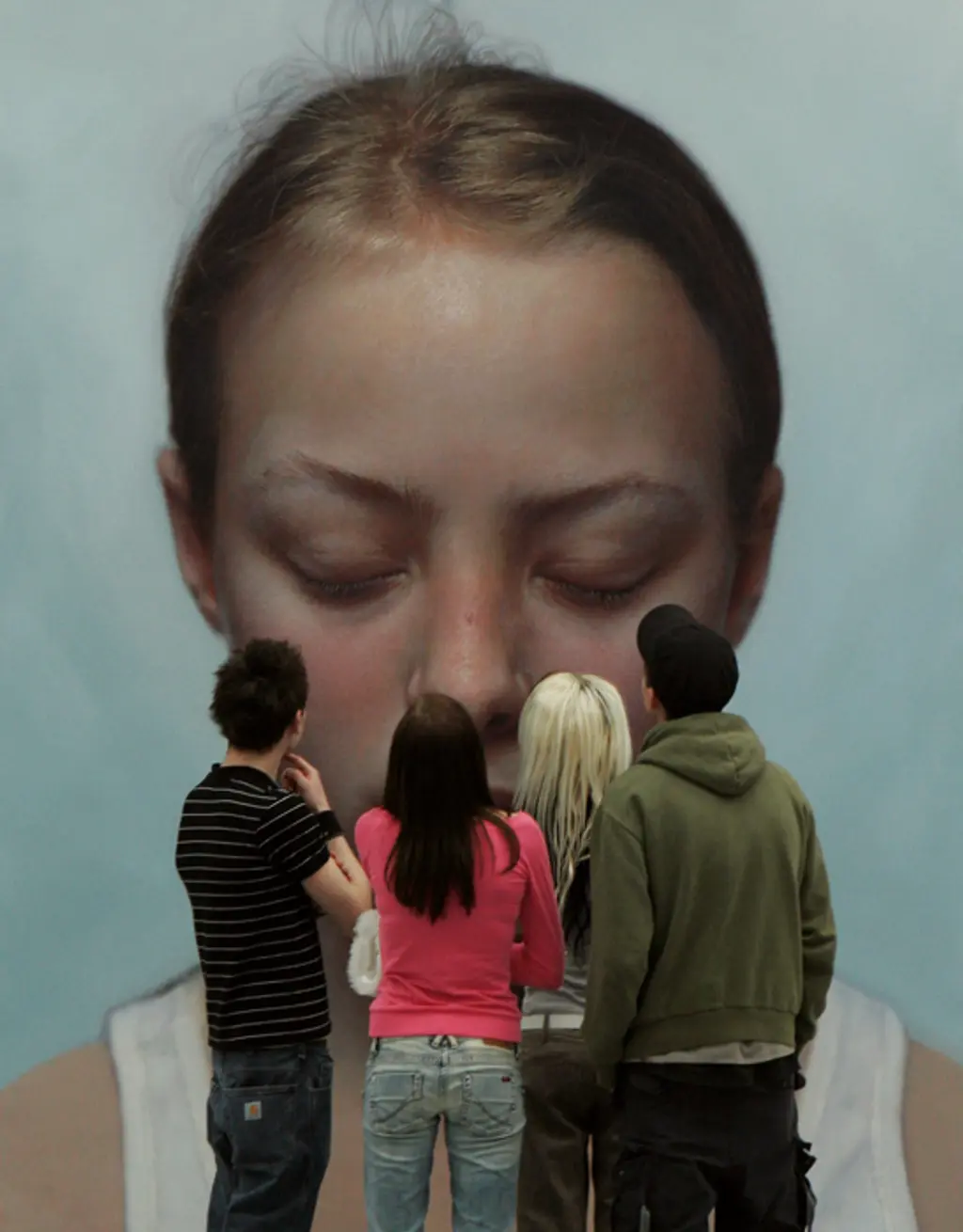
Face it
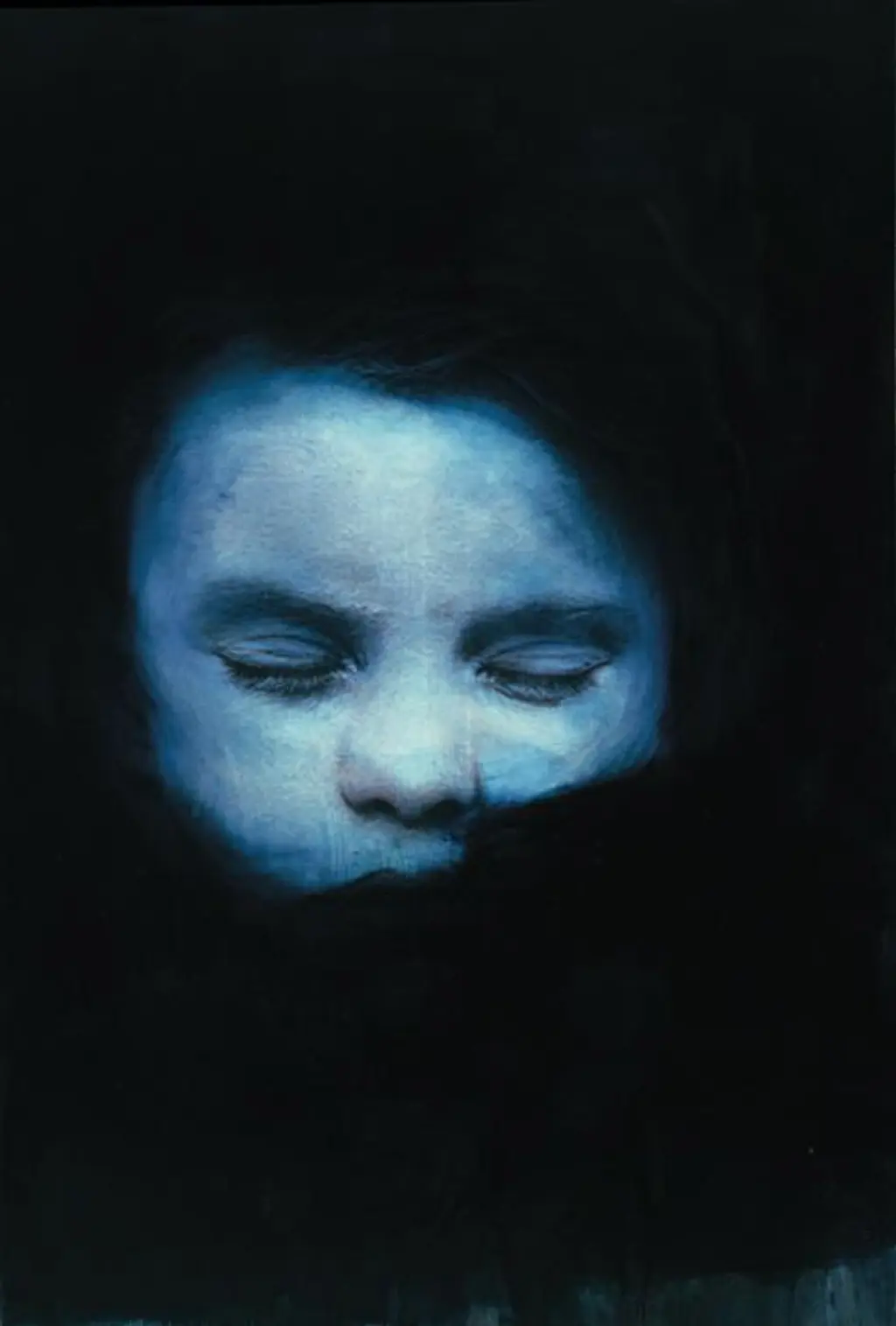
Untitled
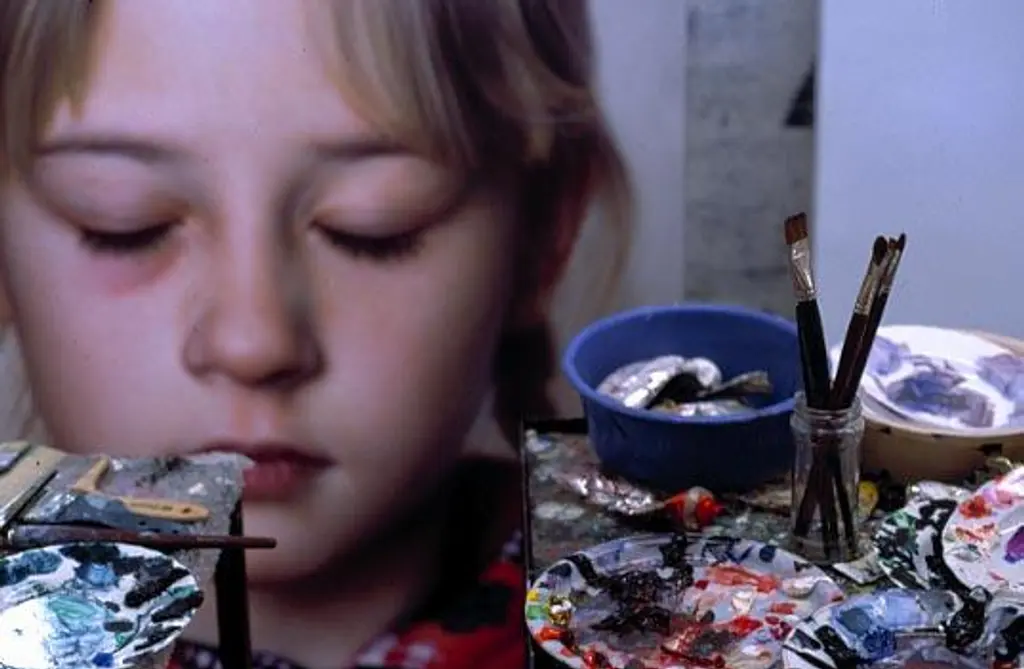
studio scene
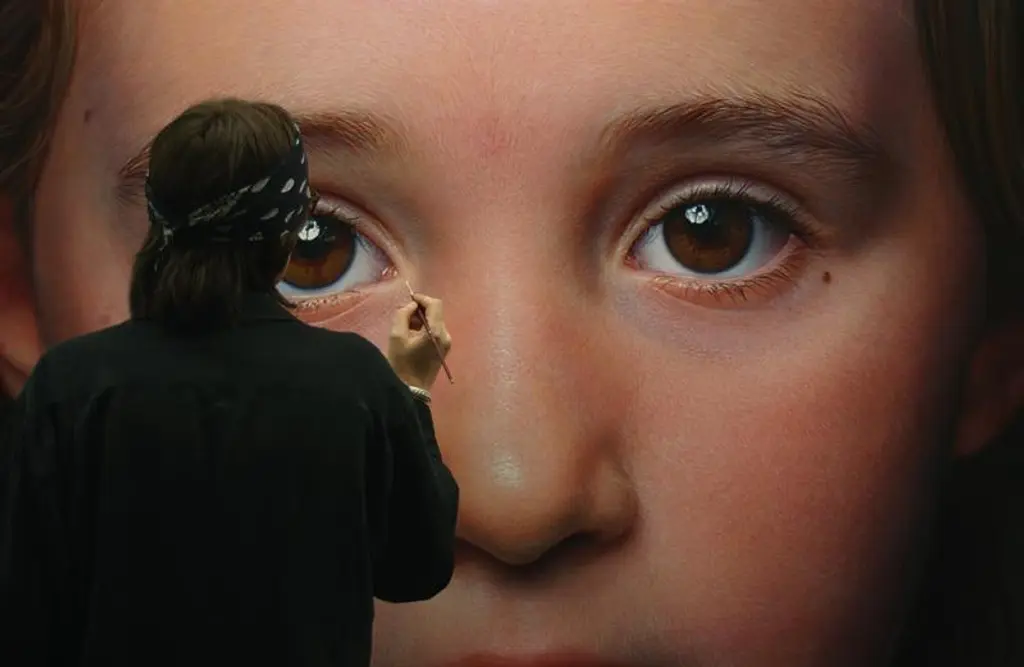
working on "Head of a Child 8" (Harley)
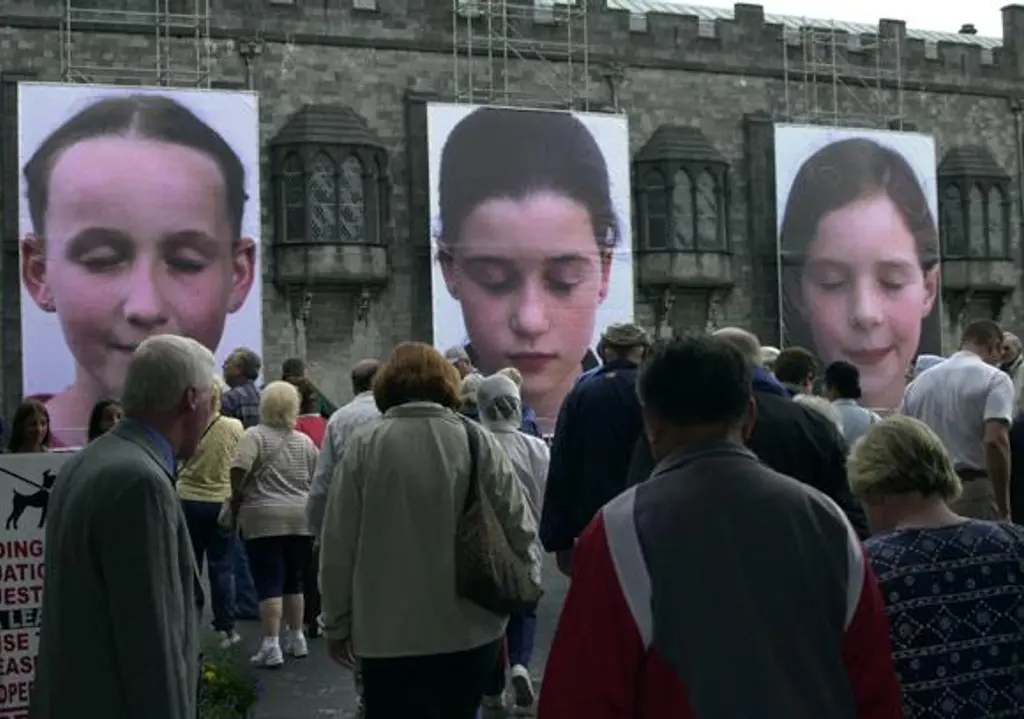
Mary-Sheila Walsh, Aoife Connelly and Eimear Connelly
The Sunday Times, Helnwein - Shock Art, cover story
Medb Ruane5. August 2001
The disturbing Work of Helnwein comes to Ireland Helnwein is a headline artist who works in tight sound bites on a very large scale. The works brand themselves with proof of his technical know-how in various media and are endorsed by the coolest celebrities of his generation. So much for the cover-story, so what lies within? Headlines lure you into stories that make you want to cry, smile or help to change the world. But when they stop at your own skin, you can get a sinking feeling, a sense of the bigness and badness outside and the impossibility of change.
III. GOTTFRIED HELNWEIN –UN CRITIQUE DE LA SOCIÉTÉ: A. LES ENFANTS.
Galia FischerUniversité Paris I. Panthéon-SorbonneMémoire de Maîtrise d’Histoire de l'art"Le nazisme dans l'oeuvre d'Anselm Kiefer et Gottfried Helnwein."2003
Dans mon récit, j’ai l’intention de présenter des œuvres de Gottfried Helnwein dans lesquelles il aborde le sujet du nazisme. Cependant, même si le rapport au nazisme dans l’œuvre d’Helnwein est au cœur de ma propre curiosité, il n’est pas nécessairement au centre du travail de l’artiste. D’après ma compréhension, la référence au thème du nazisme dans l’œuvre d’Helnwein fait partie d’un contexte plus vaste de sa vision du monde, que je vais présenter. Si on ignore la totalité de son œuvre et si on se concentre uniquement sur ces nombreux travaux où il parle du nazisme, on risque d’avoir une vision partielle de plusieurs niveaux d’analyse qui sont inhérents à sa pensée. Je vais traiter non seulement les sujets qu’il a choisis d’aborder, mais aussi le contexte historique de sa création qui est aussi significatif en regard de ses choix. Pour des raisons de clarté et afin de mettre en relief mon intérêt personnel pour la représentation controversée du nazisme dans l’art contemporain, je vais traiter séparément les œuvres au sujet du nazisme, sans ignorer naturellement le contexte de leur création.
Helnwein Exhibition in the Russian Museum